Source haccp canned tuna for restaurants, retailers, and food service
Find 30 verified listings for haccp canned tuna with details on certifications like HACCP, ISO, and BRC. Buyers can compare specifications, packaging options, and pricing to identify suitable suppliers for bulk procurement needs.
Key considerations
Products List




Comprehensive Sourcing Guide
Strategic Sourcing Guide for HACCP Certified Canned Tuna
Navigating the global market for canned tuna requires a rigorous approach to supplier verification, particularly when the core requirement involves HACCP certification. For procurement professionals, the intersection of food safety standards and product specifications defines the viability of a supply chain. The following guide synthesizes observed market data and technical attributes to provide a disciplined framework for sourcing this specific aquatic product. Buyers must understand that while certifications like HACCP, FDA, ISO, and BRC are frequently cited, the actual verification of these standards for specific production batches remains a critical, non-negotiable step in the procurement lifecycle.
Technical Specifications and Product Attributes
Understanding the precise technical definition of the product is the first step in any B2B procurement strategy. The market data indicates a clear distinction between various forms of canned tuna, ranging from whole fish to concentrates. The observed product specifications reveal a dominant format: whole tuna pieces preserved in oil. This is not merely a flavor preference but a structural specification that impacts logistics, shelf life, and end-use application. The raw material is consistently identified as 100% fresh tuna, processed to ensure the integrity of the meat.
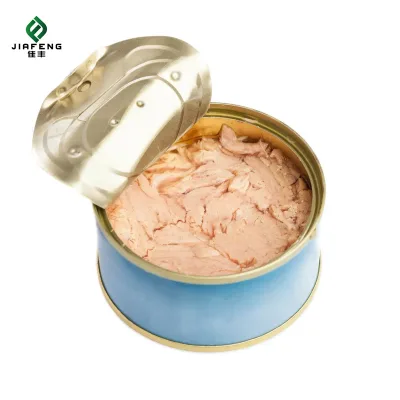
The packaging architecture is equally specific. The standard configuration involves an inner tin can housed within an outer carton. The tin itself is described as having a normal lid, though some listings highlight an "easy open lid" feature, which is a significant value-add for retail or food service applications. The net weight of individual units varies in the observed data, with specific models citing 120g and 185g as common sizes. The standard carton specification often aggregates these units, with one observed standard being 48 cans per carton, each weighing 185g. This results in a total carton weight of approximately 8.88kg, excluding the weight of the packaging materials themselves.
The processing method is another critical technical variable. The primary preservation process observed is "in oil," which serves both as a flavor enhancer and a preservation medium. This contrasts with other potential formats like water-packed or brine-packed variants, which may have different density and caloric profiles. The product is explicitly labeled as "Ready to Eat," indicating that the canning process achieves full sterilization, eliminating the need for further cooking before consumption. This attribute simplifies the supply chain for downstream manufacturers who may use the tuna as an ingredient in salads, sandwiches, or ready-to-eat meals.
Compliance and Certification Verification
The core keyword "HACCP canned tuna" places food safety at the forefront of the sourcing decision. While the product attributes list a comprehensive suite of certifications including HACCP, FDA, ISO, BRC, Halal, and Kosher, buyers must treat these as observed claims that require active verification rather than guaranteed facts for every transaction. The presence of these certifications suggests a supplier's capability to meet international standards, but the scope of coverage can vary.
HACCP (Hazard Analysis and Critical Control Points) is a systematic preventive approach to food safety. For canned tuna, this involves identifying critical control points in the canning process, such as thermal processing, sealing integrity, and metal detection. Buyers should request the specific HACCP plan from the supplier to ensure it covers the entire production line, from the receipt of raw tuna to the final sealing of the can. Similarly, BRC (British Retail Consortium) and ISO (International Organization for Standardization) certifications indicate a robust quality management system. However, the validity of these certificates depends on the issuing body and the date of the last audit.
The FDA certification is particularly relevant for products destined for the United States market. This implies compliance with the Code of Federal Regulations regarding food additives, labeling, and sanitary processing. Halal and Kosher certifications are essential for markets with specific religious dietary requirements. When evaluating a supplier, the procurement team must verify that the specific production facility listed on the certificate matches the facility where the goods will be manufactured. A common pitfall is relying on a corporate-level certification that does not extend to the specific plant or production line.
Cost Drivers and Pricing Dynamics
The pricing of canned tuna is influenced by a complex interplay of raw material costs, processing methods, and logistics. The observed price range in the market spans from $1 to $41.6 per unit, a wide variance that reflects differences in brand positioning, can size, and packaging complexity. The lower end of this spectrum likely corresponds to bulk industrial-grade products with minimal branding, while the higher end may include premium brands, specialized packaging, or smaller order quantities.
The Minimum Order Quantity (MOQ) is a significant cost driver. The observed MOQ range is between 500 and 2100 units. This variation suggests that suppliers have different production capacities and cost structures. Ordering at the lower end of the MOQ spectrum may result in a higher unit cost due to the fixed costs of setup and logistics being amortized over fewer units. Conversely, ordering at the higher end can significantly reduce the per-unit cost but increases the capital tied up in inventory.
Raw material volatility is another critical factor. Since the product is made from 100% fresh tuna, fluctuations in the global tuna catch, seasonal availability, and fuel costs for fishing vessels directly impact the base price. The "in oil" processing method adds the cost of the oil itself, which is subject to its own market fluctuations. Additionally, the packaging material, specifically the metal used for the cans, is a commodity with price volatility. Buyers should anticipate that price negotiations will often be tied to the current market price of tuna and metal, rather than a fixed annual rate.
Typical Applications and Market Segmentation
The versatility of canned tuna allows it to serve multiple market segments, from industrial food manufacturing to retail distribution. The "Ready to Eat" attribute and the "Oil Flavor" specification make it an ideal ingredient for the food service industry. Restaurants and catering services utilize this product for quick meal preparation, reducing labor costs associated with cooking raw fish. The whole fish part specification is particularly valued in premium applications where texture and presentation are paramount, such as in high-end salads or gourmet sandwiches.
For retail consumers, the "Normal Carton" and "Paper Label" configuration suggests a product designed for standard supermarket shelving. The 185g size is a common single-serving portion, while the 120g size may target smaller households or specific dietary needs. The "Easy Open Lid" feature is a strong selling point for the retail sector, as it enhances consumer convenience and reduces the barrier to entry for the product.
In the industrial sector, the product serves as a bulk ingredient. The "Concentrate" processing method mentioned in some attributes indicates a variant that may be used for further processing into spreads, pâtés, or canned fish mixtures. The "Shelf Life" of 3 years or greater than 12 months provides flexibility for long-term storage and global distribution. This extended shelf life is crucial for exporters shipping from China to distant markets, ensuring product quality remains intact throughout the transit time.
Supplier Evaluation and Geographic Considerations
Geographic origin plays a pivotal role in supplier evaluation. The data consistently points to China, specifically the Shandong province, as the primary place of origin. Shandong is a major hub for seafood processing in China, offering established infrastructure for canning and export. The "Address" and "Place of Origin" fields confirm this concentration. Buyers should verify the specific location of the manufacturing facility within Shandong to assess logistical efficiency and potential risks related to local infrastructure or regulatory environments.
When evaluating suppliers, the "Brand Name" field indicates a flexibility between established brands like "Jiafeng" and OEM (Original Equipment Manufacturer) options. This suggests that many suppliers are capable of private labeling, allowing buyers to create their own brand identity. However, the reliance on OEM models requires a higher level of due diligence regarding the supplier's quality control systems. The "Manufacturer" field explicitly names "Jiafeng," which serves as a reference point for the type of entity operating in this space, though buyers should not limit their search to a single entity.
The "Transport" method is listed as "by Sea," which is standard for bulk seafood exports. This implies a lead time that must account for ocean freight schedules. The "Shipment" attribute of "Prompt" suggests a willingness to expedite orders, but this should be clarified in the contract. Payment terms are noted as "Negotiation," indicating that buyers have room to structure deals based on their creditworthiness and order volume. The "Samples" attribute confirms that suppliers are generally willing to provide product samples for quality assessment before committing to a large order.
Quality Control and Long-Term Procurement
Maintaining quality over the long term requires a proactive approach to quality control. The "Storage Method" of "Normal" and "Storage Type" of "Avoid light" are critical instructions for the end-user but also reflect the product's sensitivity. Buyers must ensure that their logistics partners adhere to these storage conditions to prevent degradation of the oil or the metal can. The "Label" being a "Paper Label" means that moisture and handling during transit must be controlled to prevent label damage, which can affect brand perception.
For long-term procurement, the "Specification" of the product must remain consistent. The "prod_model" DBCF-T170 and the "Size" of 48 cans per carton represent a standard that should be locked into the contract. Any deviation in can size, weight, or packing configuration should be treated as a material breach. The "Instruction for use" being "Ready to Eat" implies that the product must meet strict microbiological standards. Regular third-party testing for heavy metals, particularly mercury, is essential for canned tuna, as this is a known risk associated with predatory fish.
Buyers should also consider the "Payment Term" and "Shipment" flexibility. Negotiating terms that align with cash flow cycles can improve the financial health of the procurement operation. The ability to request samples and the supplier's agreement to provide them are positive indicators of a collaborative relationship. Ultimately, the success of sourcing HACCP certified canned tuna depends on a continuous feedback loop between the buyer and the supplier, ensuring that the technical specifications, safety standards, and delivery schedules are met consistently over time.
Conclusion
Sourcing HACCP certified canned tuna is a multifaceted process that demands attention to technical details, regulatory compliance, and supply chain dynamics. The observed data highlights a market dominated by whole fish, oil-packed products from China, with a wide range of certifications and packaging options. By focusing on the verification of certifications, understanding the cost drivers, and maintaining strict quality control protocols, buyers can build a resilient supply chain. The flexibility in branding and the robust shelf life of the product make it a versatile asset for various market segments. Success in this sector relies not just on finding a supplier, but on establishing a partnership that prioritizes safety, consistency, and mutual growth.
FAQs
What certifications do HACCP canned tuna suppliers typically hold?
Suppliers typically hold HACCP, FDA, ISO, and BRC certifications. Some listings also include Halal and Kosher certifications. Buyers must verify that these certificates apply to the specific production facility and not just the corporate entity.
How is the canned tuna processed and preserved?
The product is processed as whole fresh tuna preserved in oil. It is ready to eat and sterilized during the canning process. The oil serves as both a flavor enhancer and a preservation medium for the meat.
What are the standard packaging specifications for these products?
Standard packaging uses an inner tin can with a normal or easy-open lid inside an outer carton. Common configurations include 48 cans per carton, with individual weights of 120g or 185g. Paper labels are typically applied to the tins.
Can buyers request custom branding or OEM services?
Yes, customization is available for private labeling and OEM services. Buyers can choose between established brand names or create their own identity. This flexibility allows for tailored product presentation for specific retail or industrial markets.
What is the typical shelf life of canned tuna products?
The shelf life is generally three years or more than twelve months. This extended duration supports long-term storage and global distribution. Proper storage requires avoiding light and maintaining normal conditions to preserve quality.
Which locations are the primary sources for this product?
The primary place of origin is Shandong, China. This region is a major hub for seafood processing with established canning infrastructure. Buyers should verify the specific facility location within the province for logistical planning.
What are the minimum order quantities for bulk purchases?
Minimum order quantities range from 500 to 2100 units depending on the supplier. Lower MOQs may result in higher per-unit costs due to fixed setup expenses. Higher volumes can reduce the unit price but increase inventory capital requirements.